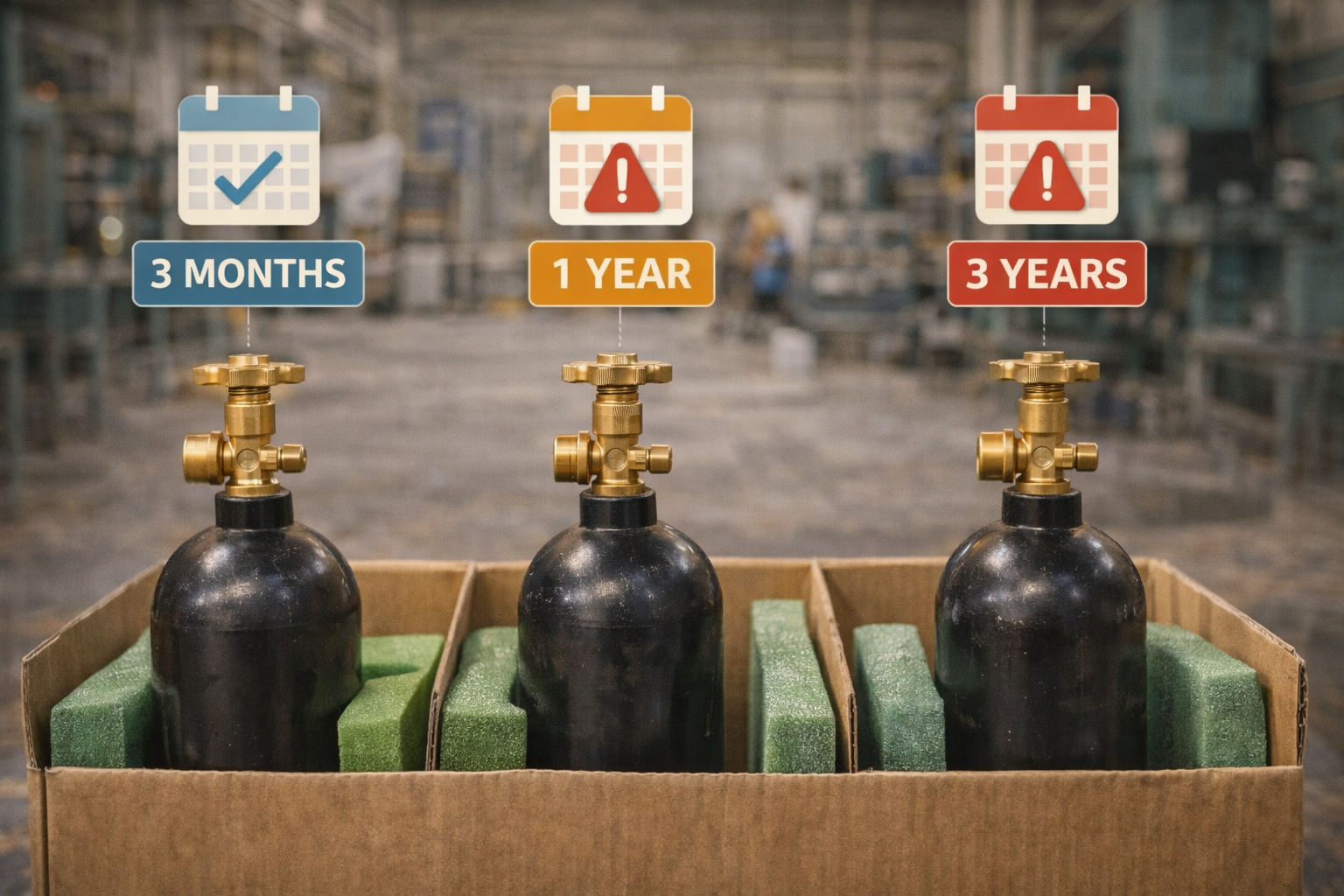
If you’ve shipped gas cylinders long enough, you’ll eventually face this situation:
the cylinders leave the factory perfectly fine, but some arrive dented, scratched, or with damaged threads. And suddenly, what should have been a smooth delivery turns into a long chain of explanations, claims, and unhappy customers.
We’ve been there. More than once.
What surprised us most wasn’t that damage happened — it was how often the root cause had nothing to do with production quality. Shipping damage looks like a quality issue, but in reality, it’s usually a packaging and handling problem that nobody paid enough attention to.
Our early mistake: treating packaging as a “logistics detail”
In the beginning, we focused almost entirely on production.
Material, heat treatment, testing — all carefully controlled.
Packaging? We treated it as something “good enough.”
That mindset cost us. One shipment arrived with multiple cylinders showing thread deformation. At first, everyone blamed machining. After a closer look, we realized the threads were fine when they left the factory. The damage happened during transport, when pallets shifted and weight transferred incorrectly.
That was the moment we stopped seeing packaging as an afterthought.
The real causes of shipping damage (from what we’ve seen)
Over time, we noticed that shipping damage almost always comes from a few repeat issues:
- cartons that collapse under stacking pressure
- pallets that flex during handling
- cylinders moving inside boxes
- thread areas left unprotected
- incorrect stacking direction
None of these show up in a factory inspection report. They only appear after weeks at sea and multiple loading and unloading points.
Once you see this pattern, the solution becomes clearer.
What actually reduced damage for us
We didn’t fix everything at once. We changed things step by step and watched the results carefully.
Stronger cartons made a bigger difference than expected
Upgrading carton strength reduced deformation almost immediately. Heavier cylinders need cartons that can handle vertical pressure, not just side impact.
Pallet structure matters more than pallet size
We reinforced pallets and adjusted how weight was distributed. A slightly thicker pallet reduced flexing during forklift handling — something you never see in photos, but feel during transport.
Thread protection was non-negotiable
Threads are the most sensitive part of a cylinder. Once we added dedicated protection and fixed positioning inside cartons, thread-related complaints dropped sharply.
Stacking rules had to be enforced, not suggested
We stopped relying on “standard stacking” and documented exact stacking methods for each product type. This reduced random handling variations during loading.
Why damage often gets misclassified as “quality problems”
From a customer’s point of view, a damaged cylinder is a defective cylinder. The cause doesn’t matter.
Internally, though, this distinction is critical. If you misidentify shipping damage as a manufacturing issue, you end up fixing the wrong problem — changing machining, adjusting tolerances, or reworking processes that were never the issue.
That’s why we now treat packaging and shipping as part of product quality, not separate from it. When customers ask about delivery reliability, we often walk them through our shipping approach directly, because it explains more than any test report ever could.
One thing importers often overlook: responsibility boundaries
Another source of confusion is responsibility during transport. Many disputes start because buyers and suppliers never clearly define who is responsible at each stage of shipping.
Understanding basic trade terms helps here. Even a simple overview of how responsibilities shift during international shipping, such as those explained when people discuss Incoterms, can prevent a lot of frustration later. Once expectations are aligned, decisions about packaging and insurance become much easier.
What I usually tell customers now
When a buyer asks us, “How do you reduce shipping damage?” I don’t answer with promises. I explain the system:
- how cartons are selected
- how pallets are built
- how cylinders are fixed inside
- how stacking is controlled
- how loading is supervised
If a supplier can’t explain these things clearly, damage reduction is probably accidental, not intentional.
And accidental success doesn’t scale.
Final thought
Shipping damage is rarely bad luck.
It’s almost always the result of small decisions that seemed unimportant at the time.
Once we stopped separating “production quality” from “shipping quality,” damage rates dropped and conversations with customers became much easier. Fewer surprises, fewer claims, and far fewer uncomfortable emails.
In this business, that peace of mind is worth far more than shaving a few cents off packaging cost.