Skip to content
When I think back to my first years in the gas cylinder industry, I can still remember how confusing the sourcing landscape felt. I saw importers lose entire shipments, fail customs checks, and even shut down product lines — not because they lacked effort, but because they didn’t understand what real manufacturing capability looks like in this category.
And after many years of working inside a factory, I can say with confidence: most importers fail not because China lacks good suppliers, but because they don’t know how to identify the ones who actually follow strict safety and quality control standards.
High-pressure products are unforgiving. A minor issue in heat treatment, alloy purity, or thread cutting can turn into a safety risk weeks later. Once a batch fails hydro testing or certification review, there is no way to save it.
Table of Contents
Why do most importers fail when sourcing gas cylinders in China?
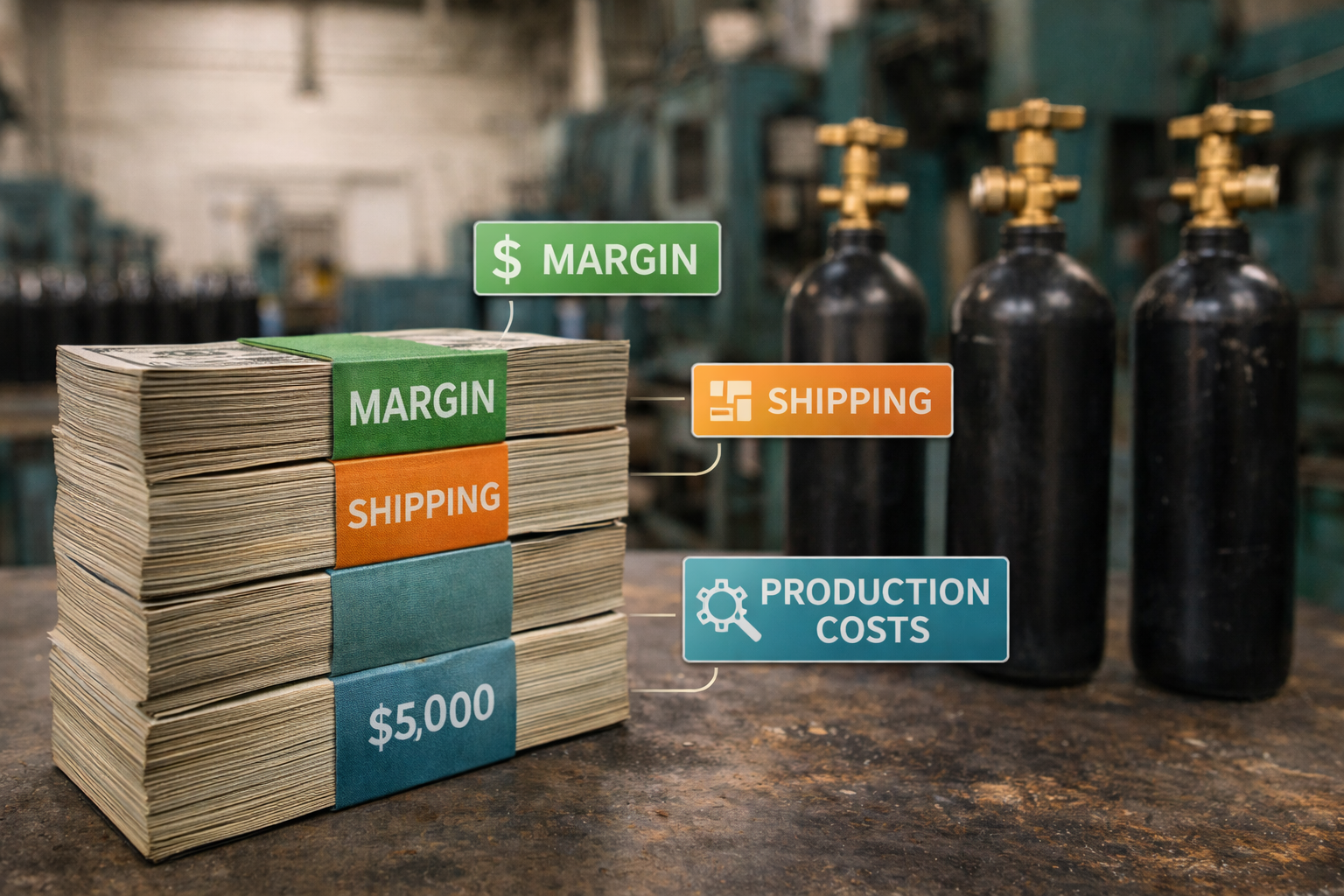
The biggest reason is simple: they choose suppliers based on price, not risk. Many buyers assume gas cylinders are “standardized,” so switching from a $13 supplier to a $10 supplier seems harmless. But behind every dollar saved, there is usually a cut in QC, certification, or material stability.
I often tell new customers — especially those sourcing paintball cylinders — to start by understanding the basic compliance framework. Even browsing a page like our paintball tank overview on Alizee’s HPA cylinder section (a resource buyers often use when learning about DOT requirements) gives a clearer picture of what safety compliance should look like in the U.S. market. Once you see the manufacturing expectations, it becomes easy to spot suppliers who cannot meet them.
The Four Real Reasons Importers Fail (From a Factory Insider’s View)
After seeing hundreds of negotiations, inspections, and production runs, I’ve narrowed the most common failure points to four patterns. They rarely change.
1. They chase the lowest price — and inherit the highest long-term risk.
If a price looks too good, it always has a reason. In this industry, that reason is rarely positive.
Suppliers who offer “special low prices” often do so by:
using recycled alloy instead of certified aluminum
shortening the heat-treatment cycle
skipping CNC calibration
reducing burst-test frequency
using thinner cartons and weaker pallets
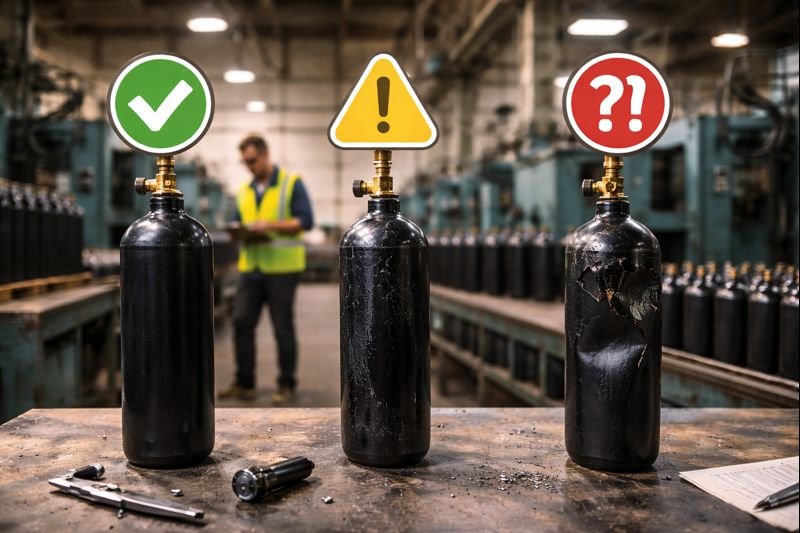
Everything seems fine… until the shipment arrives with dents, cracks, or leaks. I’ve witnessed entire 20GP containers fail hydrostatic testing because the alloy composition was unstable. The importer saved money upfront but lost the full shipment value afterward.
2. They trust photos instead of verifying real production.
Probably 70% of buyers never ask for a video walk-through of the production line.
They rely on catalogs, showroom pictures, or a sales rep’s promises.
But photos can be copied, and many “suppliers” are actually trading offices with zero manufacturing capability. A real factory will always be able to show:
CNC thread-cutting stations
burst testing machines
hydrostatic testing lines
heat-treatment ovens
digital measurement tools
A supplier who hesitates or refuses a live production video is signaling something important: they are hiding what you need to see.
3. They don’t know how to verify certifications.
Many importers think having a “certificate PDF” means the product is compliant.
Unfortunately, this is where the biggest losses happen.
Every real certification — whether DOT, CE, or TPED — must come from a traceable and recognized body. You can often spot inconsistencies by looking at how the certificate describes the quality management process. If you’re unfamiliar with these processes, even reading a general explanation of quality control principles, such as those outlined in manufacturing references like Wikipedia, can help you judge whether a PDF feels legitimate.
I’ve seen importers stuck for months because customs rejected certificates that were “edited,” “expired,” or simply unrelated to the product being shipped.
4. They underestimate packaging and logistics risk.
Even when the cylinder is perfectly manufactured, poor packaging can destroy a shipment during transport.
Common packaging failures include:
cartons with low bursting strength
thin wooden pallets that collapse
incorrect vertical stacking
lack of moisture protection
loose strapping
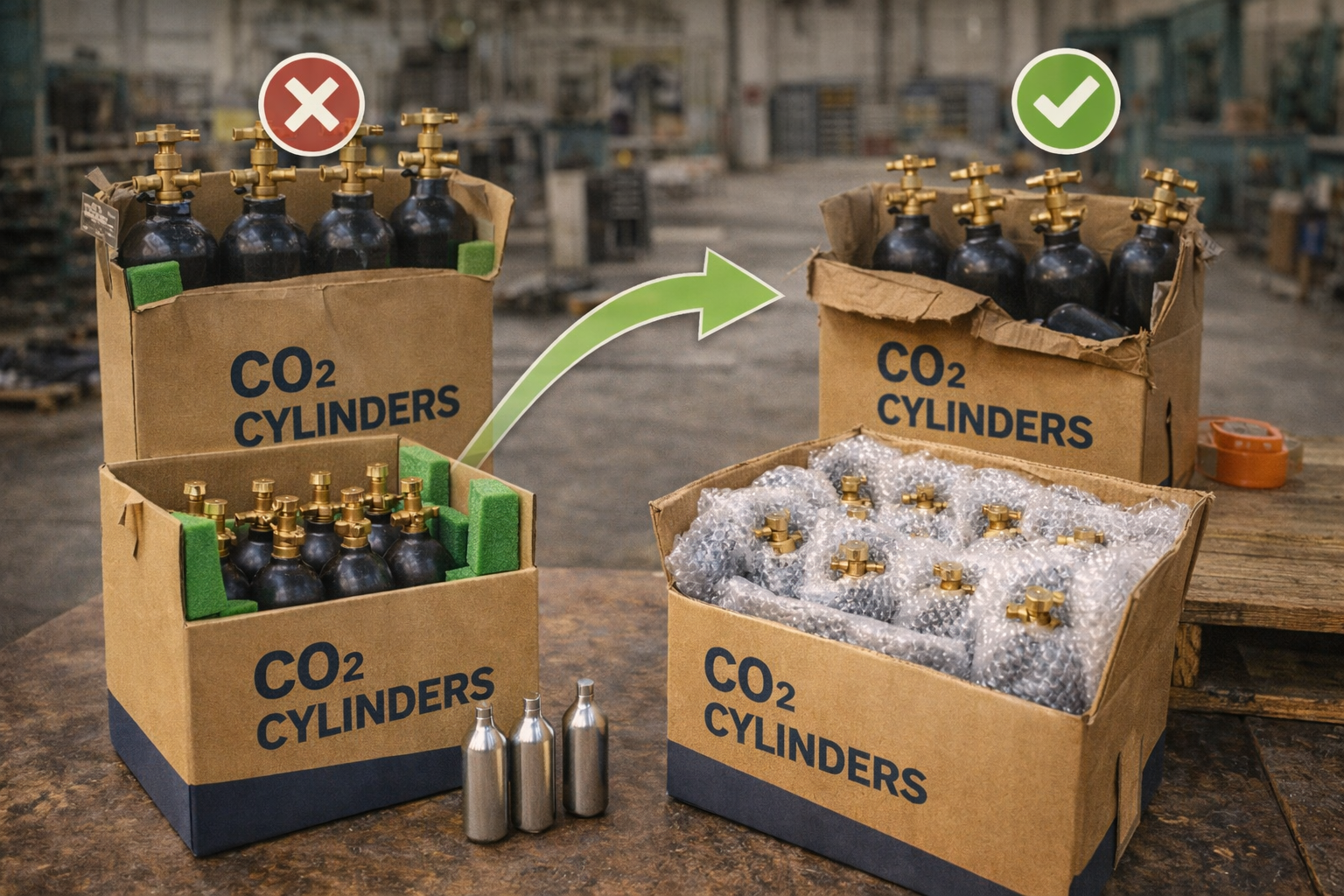
One buyer came to us after receiving 800 dented cylinders in a single batch. The supplier saved maybe $0.30 per box but caused nearly $20,000 in damage. After switching to reinforced 9-layer carton and thicker pallets, the issue disappeared completely.
Packaging is not a detail. For heavy metal cylinders, packaging is part of safety.
How Importers Can Avoid These Failures: My 10-Minute Supplier Test
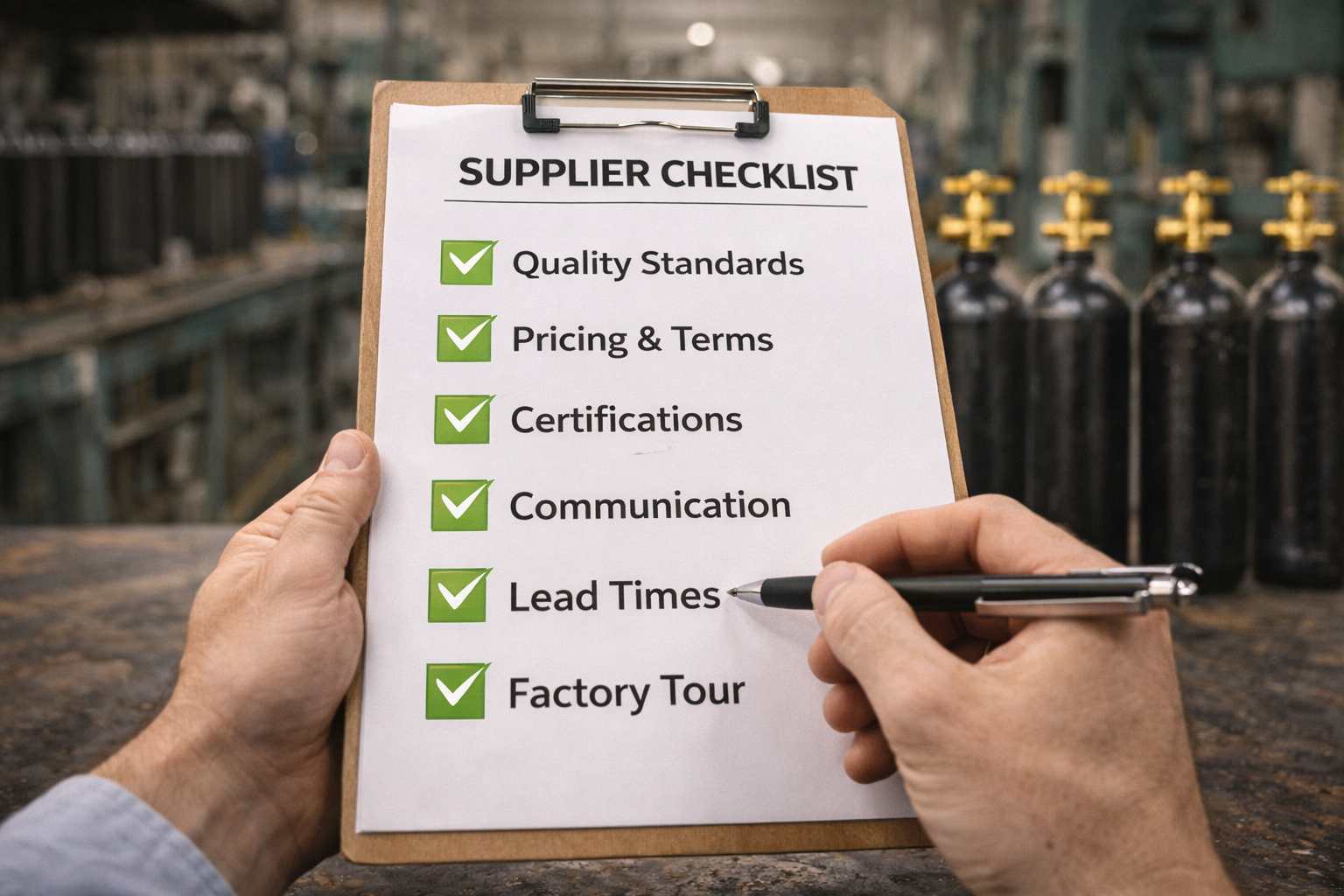
Over the years, I’ve built a simple checklist that allows me — and now my customers — to evaluate any supplier in under 10 minutes. If a supplier cannot pass these items, I recommend stopping the conversation early.
Ask these six quick questions:
Can they show a live video of the production line?
Do they have real hydro, leak, and burst testing machines on-site?
Are the certificates verifiable through recognized organizations?
Do they explain the alloy grade and heat-treatment process clearly?
Can they show how cylinders are packaged for export?
Do they answer questions with technical detail instead of generic statements?
If a supplier passes all six, they are worth considering.
If they fail even two, the sourcing risk increases dramatically.
Conclusion
Sourcing gas cylinders in China is not inherently risky. What’s risky is choosing suppliers without understanding how manufacturing, testing, and certification actually work. Once you know what to look for — how the cylinders are formed, treated, tested, and packaged — the sourcing process becomes predictable and manageable.
Most importers fail not because they chose China, but because they didn’t ask the right questions.
If this article helps you avoid even one expensive mistake, then it has already done its job.