Skip to content
At some point, almost every importer asks the same question, even if they phrase it differently:
“Why does this price feel tight, even when volumes increase?”
I’ve been on the factory side long enough to tell you this honestly: the margin structure in the gas cylinder industry is simple on the surface and brutal underneath. Most people don’t talk about it openly, not because it’s secret, but because it makes negotiations uncomfortable.
So let me talk about it the way I would if we were sitting at the same table, not across a quotation sheet.
Table of Contents
The first uncomfortable truth: margins are thinner than most people expect
From the outside, gas cylinders look like solid metal products. Heavy. Technical. Industrial.
Many buyers assume factories must be making big margins.
In reality, most compliant cylinder factories operate on surprisingly thin margins.
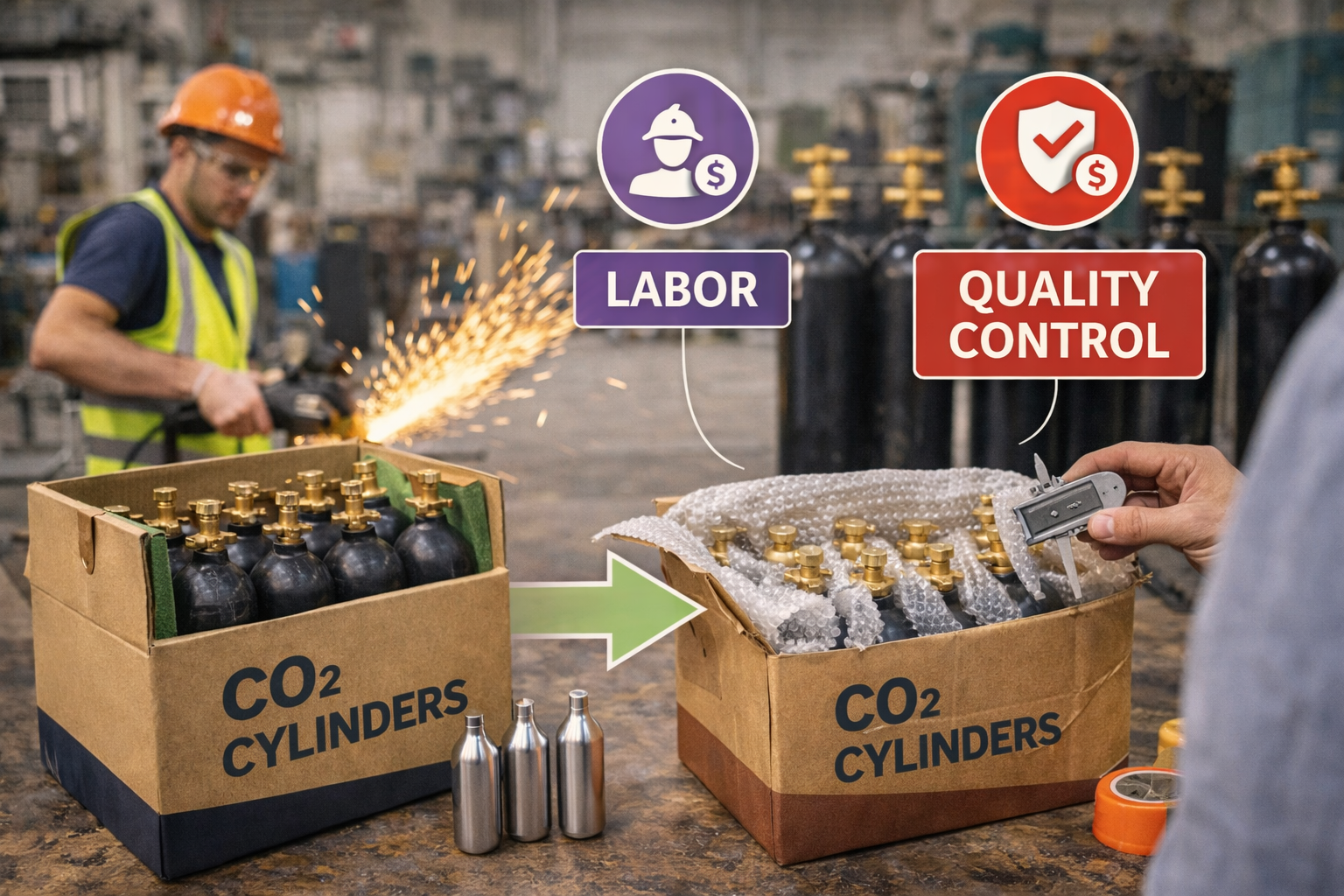
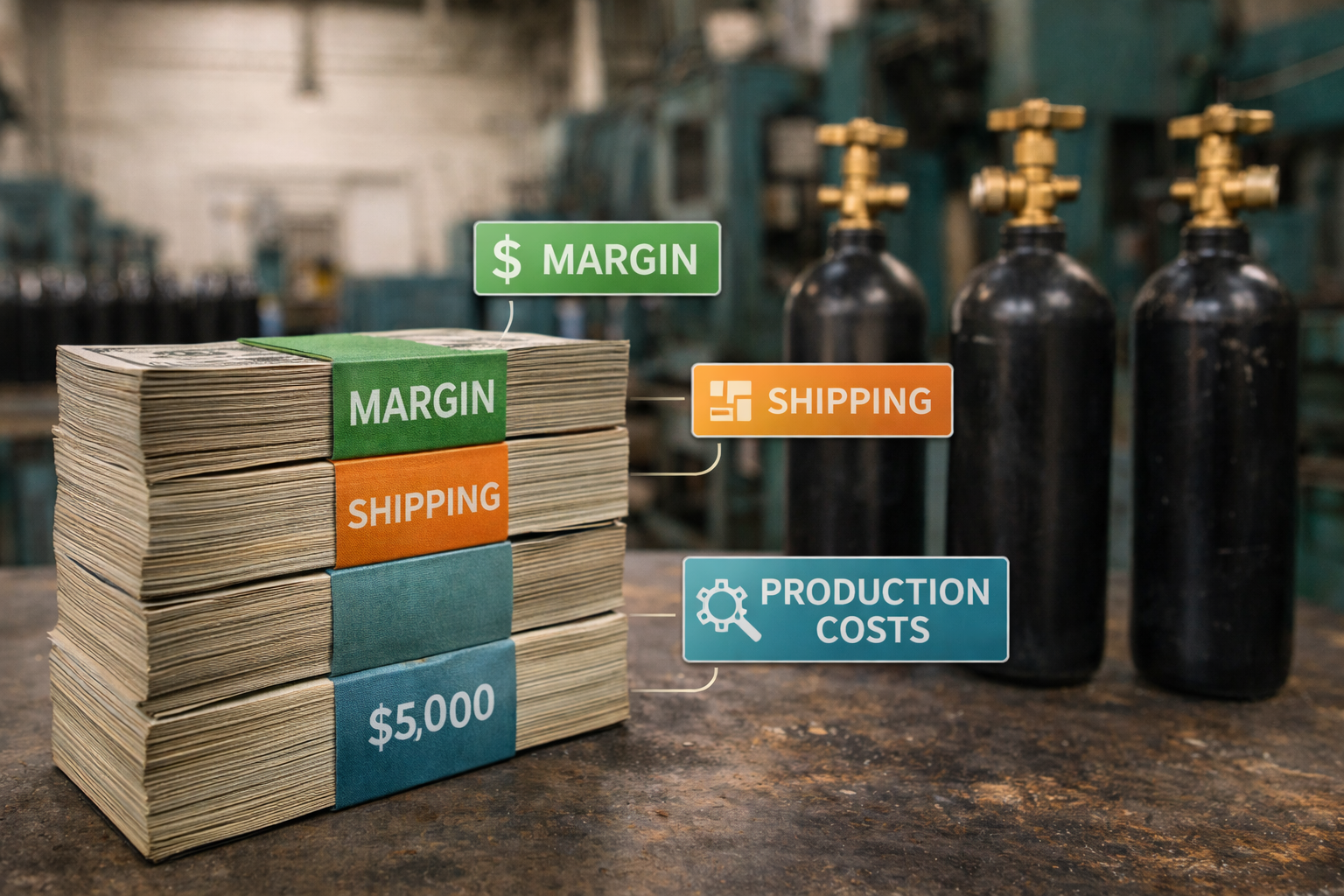
Once you include certified raw materials, controlled heat treatment, pressure testing, scrap rate, labor, packaging, and certification maintenance, there isn’t much room left.
Factories that quote extremely low prices usually don’t have better efficiency. They simply removed something from the process. The problem is that what they removed often shows up later — in returns, complaints, or lost customers.
Where the money really goes (and where it doesn’t)
One thing I’ve learned is that buyers often focus on the wrong cost drivers.
Surface finishing, printing, or polishing looks expensive, but those are not what really eat into margins. The real costs sit deeper.
What actually matters:
material purity and stability
heat treatment energy and control
destructive testing and inspection
scrap and rework
certification scope and maintenance
These costs don’t disappear when volume increases. Some of them grow.
Why higher volume doesn’t always mean much lower price
This is where many negotiations quietly fail.
Buyers expect that doubling volume should dramatically reduce unit cost. In gas cylinders, that expectation rarely matches reality.
Material scales linearly.
Testing does not scale down.
Certification obligations often increase.
Scrap risk rises as production speed increases.
Volume helps, but in small, controlled steps.
The biggest cost improvements usually come from stable specs, fixed packaging, and predictable production planning — not from simply ordering more.
The silent margin killer: logistics and shipping
Shipping doesn’t just reduce margin. It reshapes it.
Fuel costs, container availability, port rules, inland transport — these things change faster than factory pricing. I’ve seen importers negotiate hard on unit price, only to lose the entire margin to logistics changes a few weeks later.
That’s why experienced buyers eventually shift the conversation from “cheapest price” to “most predictable landed cost.” Once that mindset changes, cooperation with the factory becomes much smoother.
Branding: the one place margins actually improve
If there’s one area where I’ve consistently seen importers protect and improve margin, it’s branding.
Not flashy branding. Practical branding.
Clear labeling, traceable batch codes, consistent packaging, and proper documentation all increase trust. And trust protects pricing on the selling side.
I’ve seen the same cylinder sold at very different prices purely because one looked professional and traceable, while the other looked generic.
The metal didn’t change. The perception did.
Why factories and importers often talk past each other
When a factory pushes back on price, it’s usually not about greed.
It’s about risk.
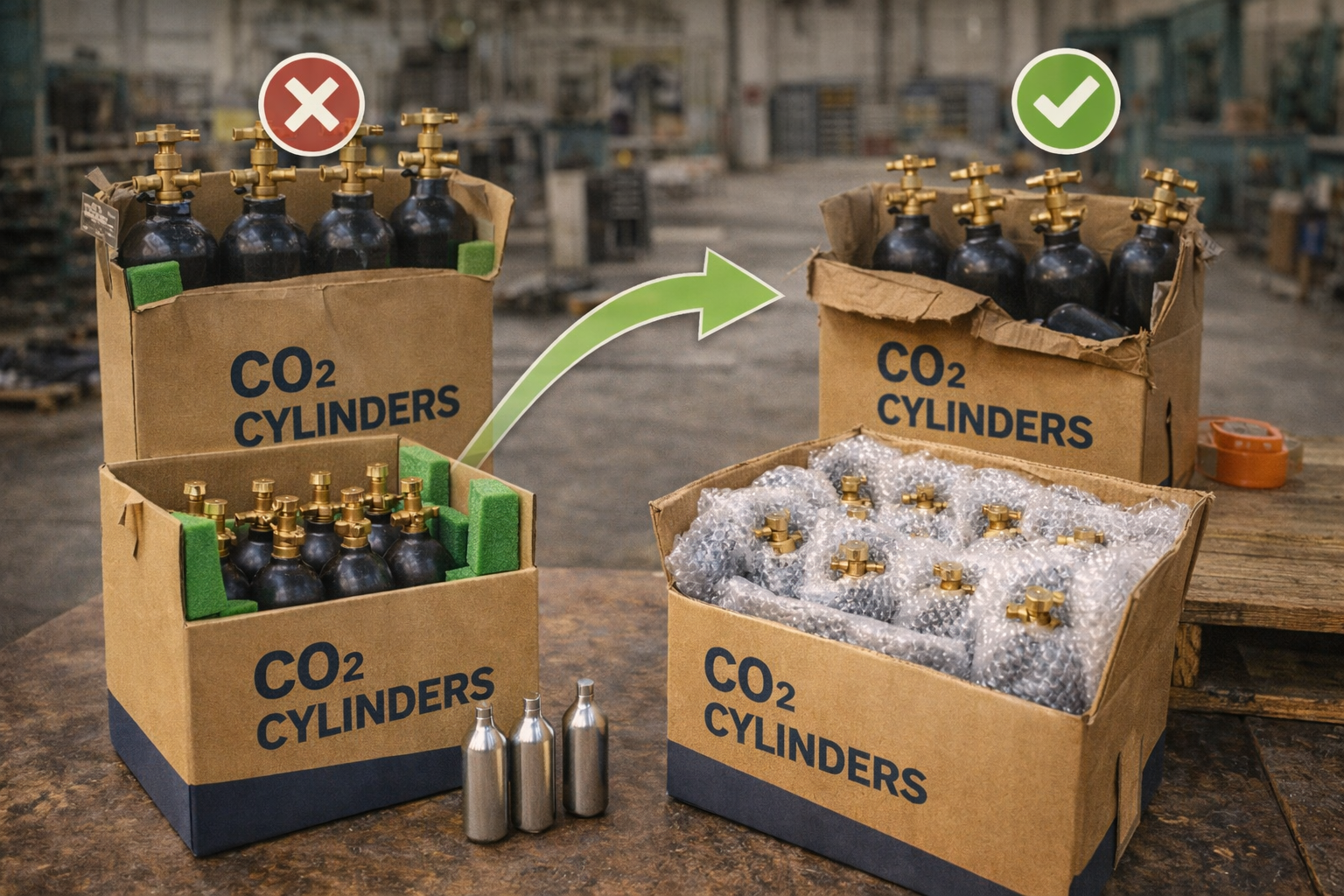
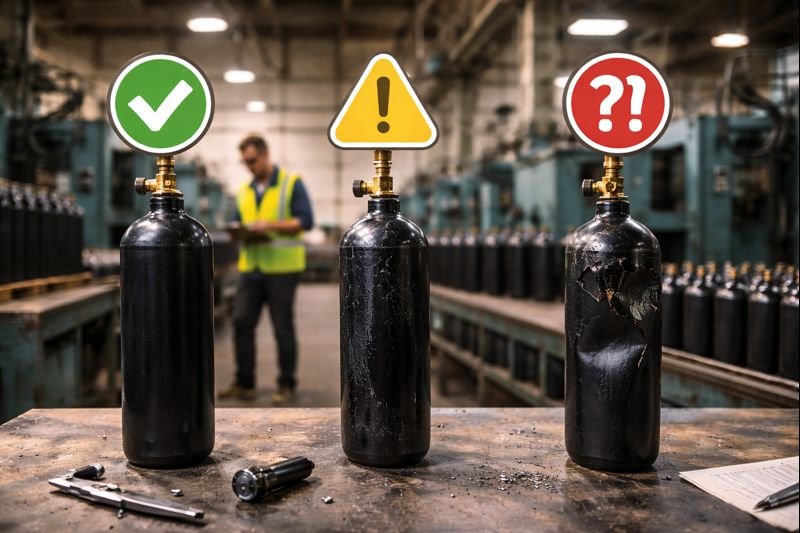
Below a certain price point, something breaks — testing frequency, tooling replacement, inspection depth, or packaging quality. Factories know exactly where those breaking points are, because we’ve crossed them before.
Once that line is crossed, quality problems stop being “if” and start becoming “when.”
Final thought
Margins in the gas cylinder industry are not about squeezing harder.
They’re about removing uncertainty.
Factories that last don’t win by being the cheapest.
Importers who scale don’t win by chasing every cent.
They win by understanding where money is really made — and where it quietly disappears.