Skip to content
This is something many distributors quietly wonder about.
You import a batch of cylinders, they sit in the warehouse for months, and eventually someone asks:
“Do these cylinders still perform the same if they’ve been stored for a long time?”
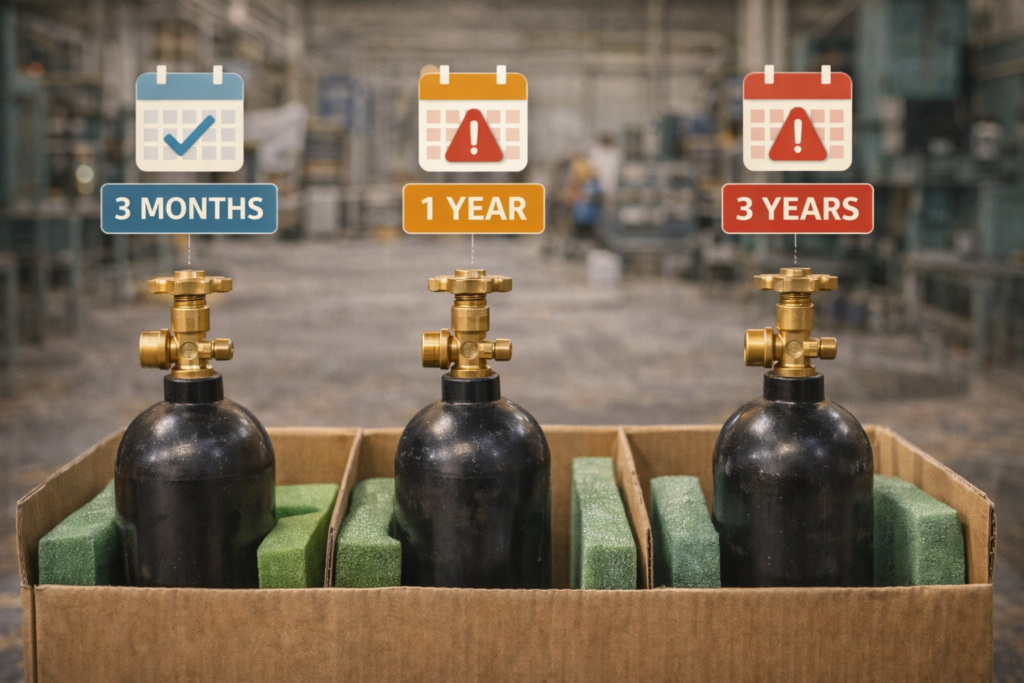
The good news is that CO2 cylinders themselves don’t really degrade over time. When manufactured correctly and stored properly, they can remain stable for years without affecting performance.
But there are a few details that experienced suppliers pay attention to.
CO2 itself is extremely stable
Unlike some industrial gases, carbon dioxide does not chemically break down during storage.
Once sealed inside a properly manufactured pressure vessel, the gas remains stable unless the container is damaged or exposed to extreme temperatures. The behavior of pressurized CO2 inside containers is well explained in the Compressed Gas Association safety overview for CO2 systems, which outlines how storage conditions affect cylinder safety and performance.
For most beverage, paintball, or soda applications, the gas itself will remain unchanged even after long storage periods.
The cylinder structure protects the gas
A properly manufactured cylinder is designed specifically to hold gas under pressure for extended periods.
The key factors are:
- stable aluminum alloy structure
- controlled heat treatment
- pressure testing before shipment
- proper valve installation
When those steps are done correctly, the cylinder acts as a long-term pressure container rather than a short-term storage device.
This is why many distributors feel comfortable storing products like aluminum CO2 cylinders used in kegerator systems in inventory for months before they reach the end customer.
Storage environment matters more than storage time
In real warehouse conditions, storage problems rarely come from the cylinder itself.
They usually come from environmental factors such as:
Humidity
High humidity can affect external coatings and metal surfaces over time.
Physical impact
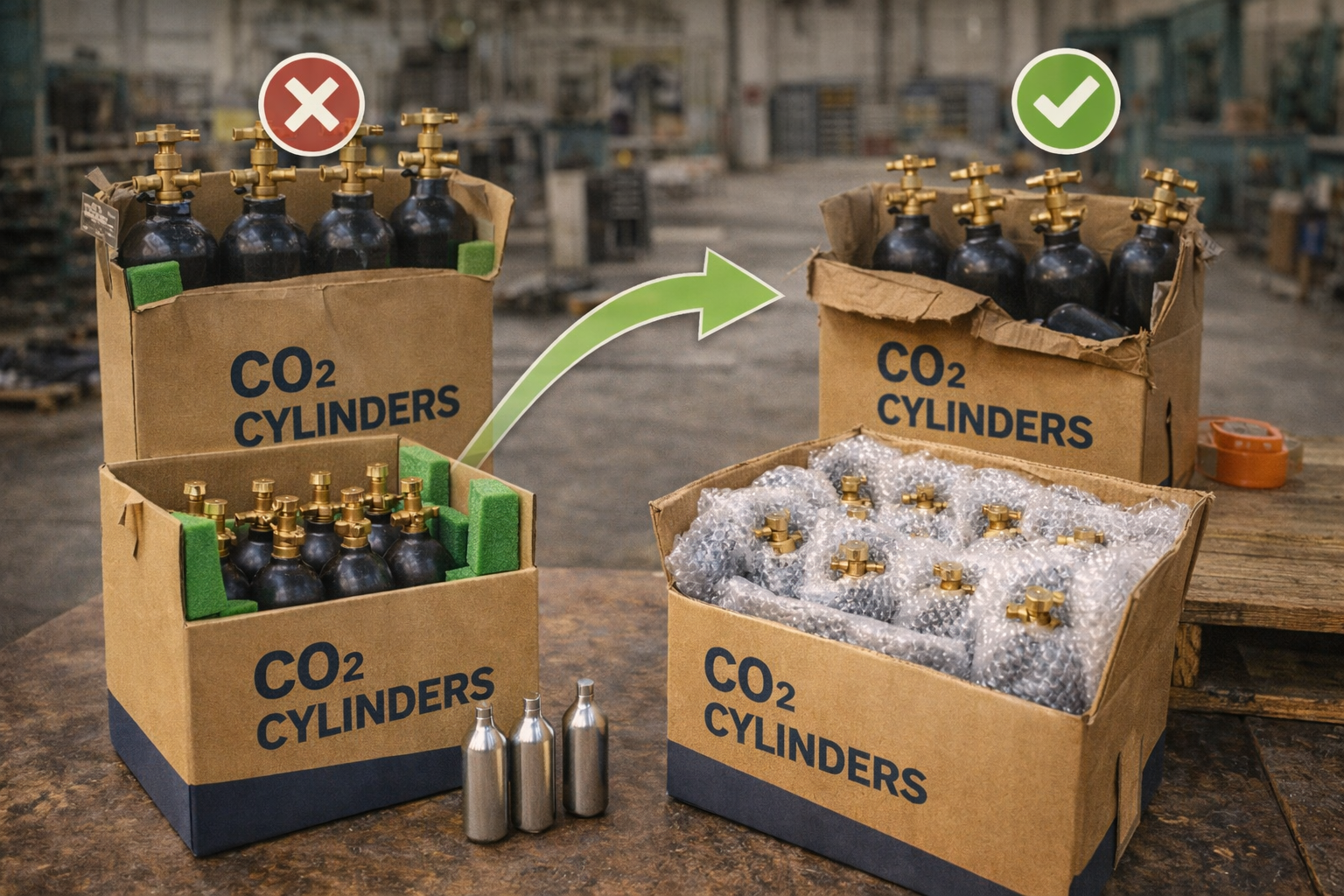
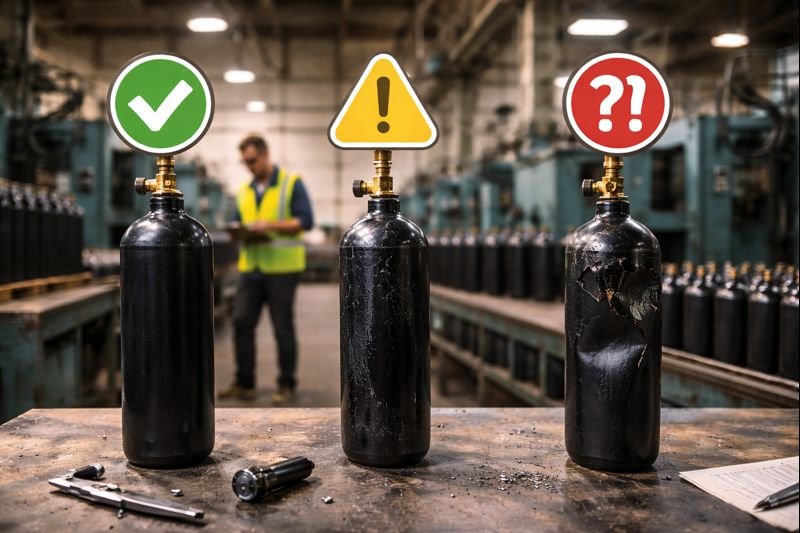
Forklifts, pallet shifting, or improper stacking sometimes damage valve threads or protective coatings.
Temperature exposure
Extreme heat can increase internal pressure temporarily, which is why cylinders should always be stored in shaded and ventilated areas.
In most normal indoor warehouses, these risks are minimal.
Real inventory situations we see
Many of our customers operate seasonal businesses.
For example, beverage distributors often import cylinders several months before peak summer demand. Paintball fields sometimes order large quantities before tournament seasons.
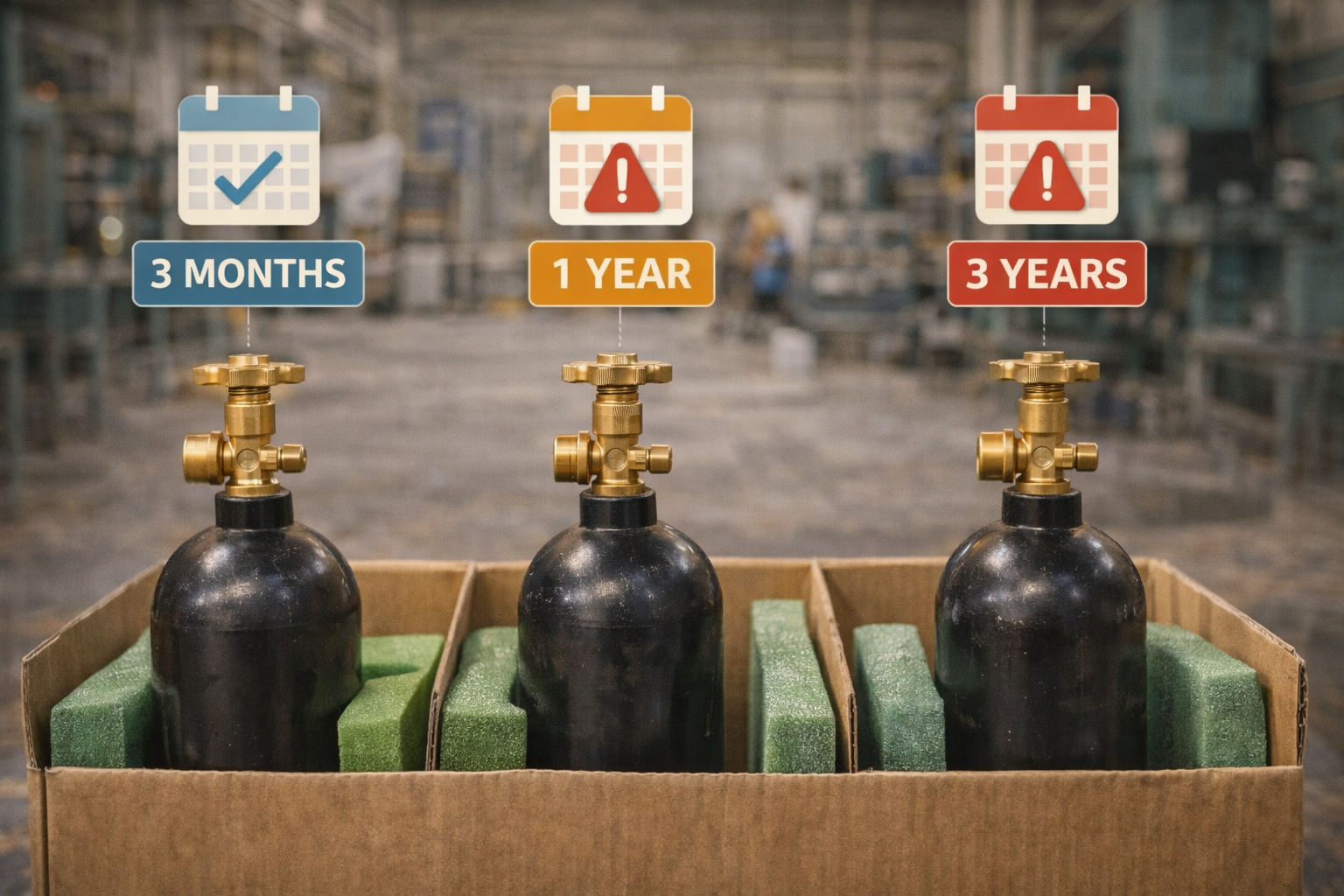
In these cases, cylinders may sit in storage for six months or even longer. As long as they are stored properly, this does not affect their functionality.
From a manufacturing perspective, long-term storage is a normal part of the supply chain.
Simple storage practices that work best
After years of exporting cylinders to different markets, we usually recommend a few simple habits:
- keep cylinders indoors and dry
- store them upright on pallets when possible
- protect valve threads during storage
- avoid stacking pallets too high
None of these practices are complicated, but they help ensure the cylinders remain in the same condition as when they left the factory.
Final thoughts
CO2 cylinders are built to function as long-term pressure containers. When manufactured correctly and stored under normal warehouse conditions, they can sit in storage for extended periods without affecting performance.
In most cases, proper handling and storage matter far more than the length of time the cylinders remain in inventory.