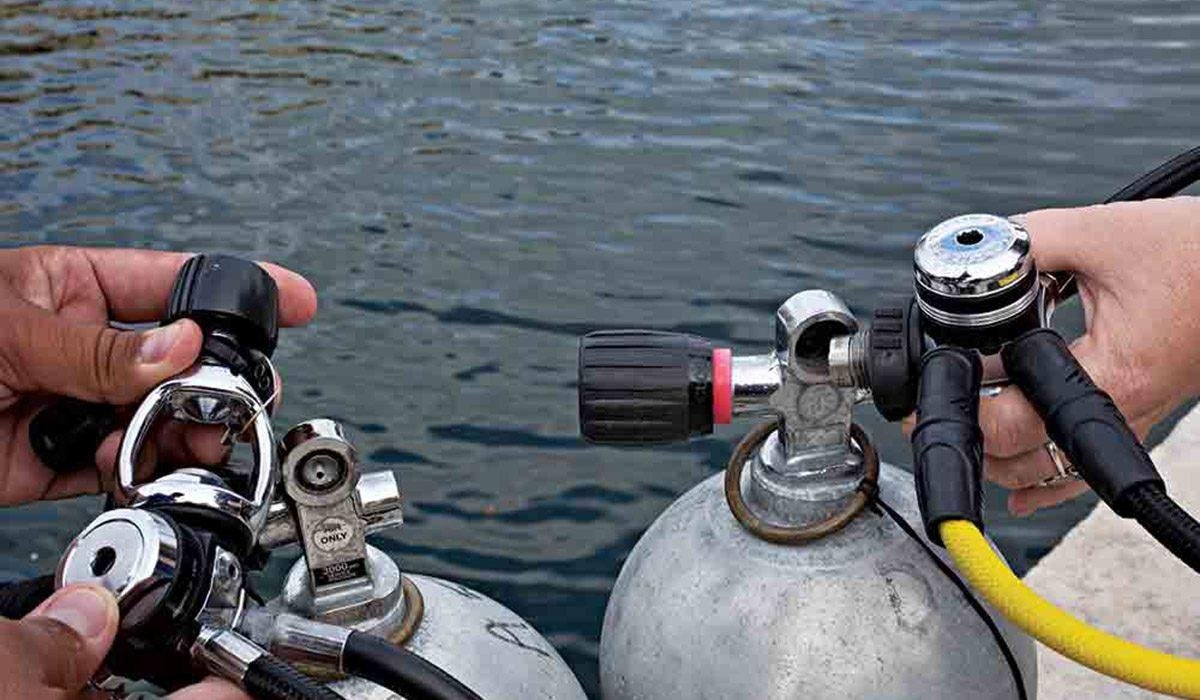
In scuba systems, one of the most common questions buyers and equipment brands face is the difference between DIN valves and yoke (A-clamp) valves.
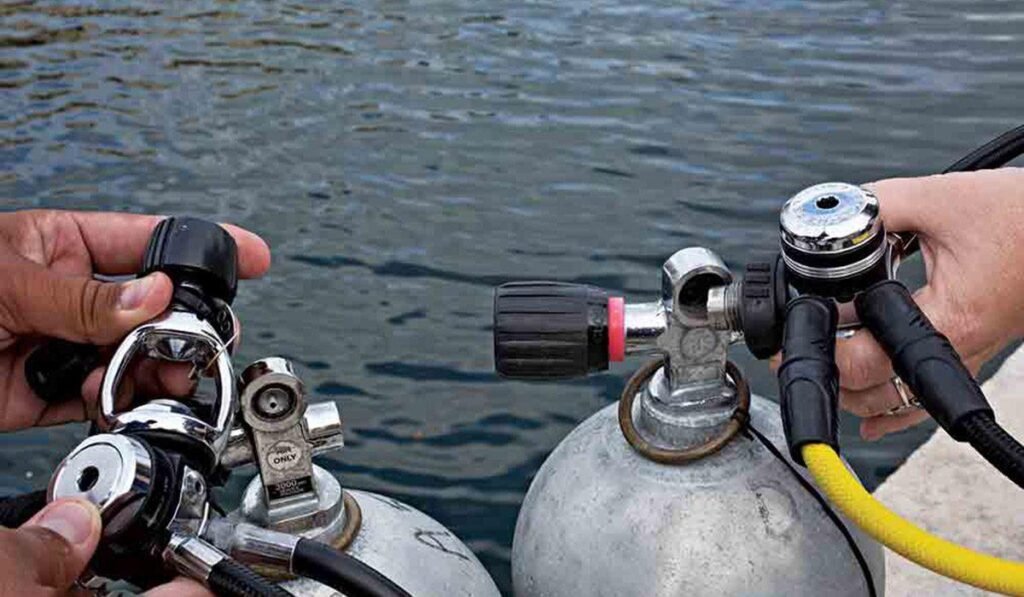
While both are used to connect regulators to diving cylinders, they are not interchangeable without proper configuration, and selecting the wrong type can lead to compatibility issues in the field.
DIN vs Yoke: Core Differences
DIN (Deutsches Institut für Normung) Connection
- Threaded connection (screw-in design)
- Higher pressure tolerance (commonly 300 bar systems)
- More secure sealing under high pressure
- Widely used in Europe and technical diving environments
Yoke (A-Clamp) Connection
- Clamp-style external connection
- Typically used for 200–232 bar systems
- Faster attachment but less secure under extreme pressure
- Common in rental and recreational diving markets (US & Southeast Asia)
Why Combo Valves Are Increasingly Preferred
Instead of choosing between DIN or yoke, many OEMs now specify combo valves.
These valves allow:
- DIN use by default (high-pressure compatible)
- Conversion to yoke via a removable insert
- Greater flexibility across different markets and regulator standards
From a supply perspective, this reduces SKU complexity and avoids compatibility issues for distributors.
Left-Hand (Reverse) Thread Scuba Valves: When Are They Used?
Most scuba cylinder valves use standard right-hand threads, but certain configurations require left-hand (reverse) threading.


#### Typical Use Cases for Left-Hand Thread Valves
- Specific regional cylinder standards
- Systems designed to prevent incorrect gas connections
- Specialized industrial or mixed-gas applications
Left-hand threads are often marked with visual indicators (such as notches) to prevent installation errors.
Why Thread Direction Matters in Procurement
Incorrect thread direction can lead to:
- Incompatibility with existing cylinders
- Safety risks during installation
- Project delays due to mismatched specifications
For this reason, thread type (RH vs LH) is always confirmed during the technical specification stage, not after order placement.
How OEM Buyers Specify Scuba Valves Correctly
From actual project experience, most issues do not come from valve quality —
they come from unclear specifications during sourcing.
Key Parameters to Confirm Before Ordering
- Thread type (DIN / Yoke / Combo)
- Thread direction (Right-hand or Left-hand)
- Working pressure (200 bar vs 300 bar)
- Cylinder neck standard
- Target certification (CE / TPED / regional compliance)
Typical Mistakes We See
- Assuming DIN and yoke are interchangeable
- Not specifying thread direction
- Mixing 200 bar and 300 bar systems
- Ignoring certification requirements for target markets
OEM Supply Model for Scuba Cylinder Valves
Similar to cylinders themselves, scuba valves are rarely supplied as open-market standardized products.
They are typically handled as:
- OEM components within complete cylinder systems
- Specification-based production orders
- Project-aligned supply for equipment brands and distributors
Sourcing Notes
Scuba combo valves (DIN / reverse thread types) are:
- Not maintained as standard stock
- Produced based on confirmed specifications
- Supplied with certification depending on destination market
This ensures that every valve matches its intended system — rather than being treated as a generic interchangeable part.
Procurement Insight (From a Factory Perspective)
If you’re sourcing scuba valves as part of a cylinder program, the real priority is not just price or lead time.
It’s whether the supplier understands:
- thread standards across markets
- DIN vs yoke compatibility logic
- pressure rating differences (200 vs 300 bar)
- and how these details affect real-world usage
Because once a mismatch happens, it’s not a simple replacement —
it often affects the entire batch of cylinders.