Over the years I’ve had many conversations with new buyers who start with the same question.
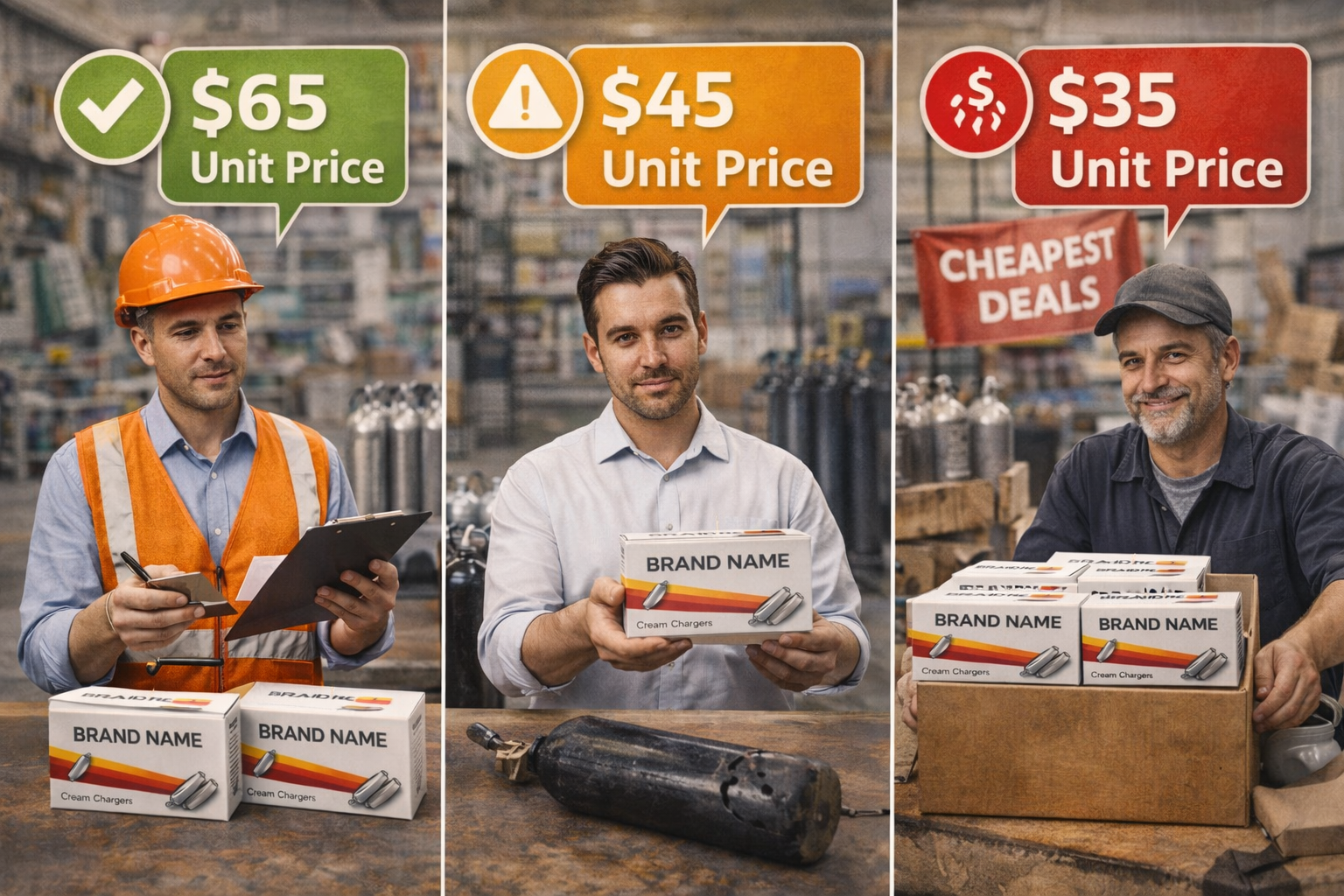
They compare two or three suppliers and notice that one of them is always cheaper. Sometimes the difference is small. Sometimes it’s surprisingly large.
Naturally the first instinct is to ask: Are we overpaying?

From the outside, CO2 cylinders look simple. A metal container, a valve, some paint, maybe a label. So when prices vary, it can feel confusing.
But once you’ve spent time inside the manufacturing side of this industry, you start to see where those price differences actually come from.
And most of the time, the answer isn’t as obvious as people expect.
Raw material quality quietly changes the price
The first place costs can change is something buyers rarely see: the aluminum itself.
Different factories source aluminum billets from different suppliers, and the quality consistency can vary more than most people realize. When the alloy composition fluctuates, it affects forming behavior, heat treatment response, and even machining stability.
Some manufacturers choose lower-cost material sources to reduce price pressure. That can work in the short term, but it also increases the chance of variation during production.
In contrast, factories that focus on stable alloy batches usually have slightly higher raw material costs, but they gain consistency across production runs.
In the pressure vessel industry, consistency matters a lot because cylinders must reliably handle internal pressure. The fundamentals of how pressure vessels behave under load are explained clearly in the American Society of Mechanical Engineers overview of pressure vessel design, which highlights why material properties and structural integrity are critical.
That’s why experienced buyers rarely look only at the surface finish or packaging when comparing cylinders.
Testing practices can change the true cost
Another factor that affects pricing is something that never reaches the customer.
Testing.
Proper cylinder manufacturing involves multiple verification steps: dimensional checks, leak testing, and burst pressure validation. Some of these tests destroy the cylinder completely because they intentionally push the product beyond safe limits.
When a factory runs frequent burst tests or strict leak tests, it increases production cost slightly. But it also reduces the risk of defective cylinders entering the market.
When quotes are dramatically lower, experienced buyers sometimes ask an uncomfortable but important question: How much testing is actually being done?
That question often reveals more about a supplier than the price itself.
Tool maintenance and machining precision matter more than expected
Cylinder manufacturing also depends heavily on tooling.
Thread cutting tools, forming dies, and machining equipment all wear down gradually. When tools become worn, small deviations can appear in threads or sealing surfaces.
Some factories try to stretch tool life as long as possible to reduce operating costs. Others replace tooling earlier to maintain tighter tolerances.
To the end user, both cylinders might look identical at first glance. But over time, small differences in machining precision can affect how well valves seal or how smoothly regulators connect.
These details rarely appear in a quotation sheet, yet they are part of the real manufacturing cost.
If a cylinder is exported internationally, documentation requirements become another layer of cost.
Compliance with regional standards involves more than simply stamping a marking on the cylinder. It requires testing records, traceability systems, and quality documentation that can be reviewed during audits.
Factories that export regularly invest significant effort in maintaining these systems. It’s not the most visible part of the product, but it’s essential for long-term supply stability.
When buyers compare suppliers, the difference between a factory experienced in international certification and one focused only on domestic markets can show up in the price.
The biggest difference often comes down to production stability
In my experience, the biggest difference between suppliers isn’t a single component or process.
It’s stability.
Stable production means predictable material quality, consistent machining results, reliable testing procedures, and smooth logistics planning. When all those elements work together, the factory can maintain quality without constant troubleshooting.
Factories that struggle with instability often try to compete purely on price. Lower quotes help them win orders quickly, but they also increase the risk of production surprises later.
Experienced importers usually learn this lesson after a few shipments.
Why many buyers eventually prioritize reliability
When distributors first enter the market, price comparisons tend to dominate purchasing decisions.
But after dealing with delayed shipments, inconsistent batches, or certification issues, many buyers shift their priorities. Predictability starts to matter more than the last few dollars in the quote.
That’s one reason many distributors eventually choose suppliers that focus on stable product platforms like refillable aluminum CO2 cylinders used in beverage systems, where production processes and certification requirements are already well established.
Reliability makes planning easier for everyone in the supply chain.
Final thoughts
Lower quotes are not always a problem. Sometimes they simply reflect different cost structures or production efficiencies.
But when price differences become unusually large, it’s worth taking a closer look at what might be happening behind the scenes.
In the gas cylinder industry, the real cost often lies in the invisible parts of manufacturing: material stability, testing discipline, tooling maintenance, and certification systems.
Understanding those factors helps buyers make decisions that go beyond the number on the quotation.