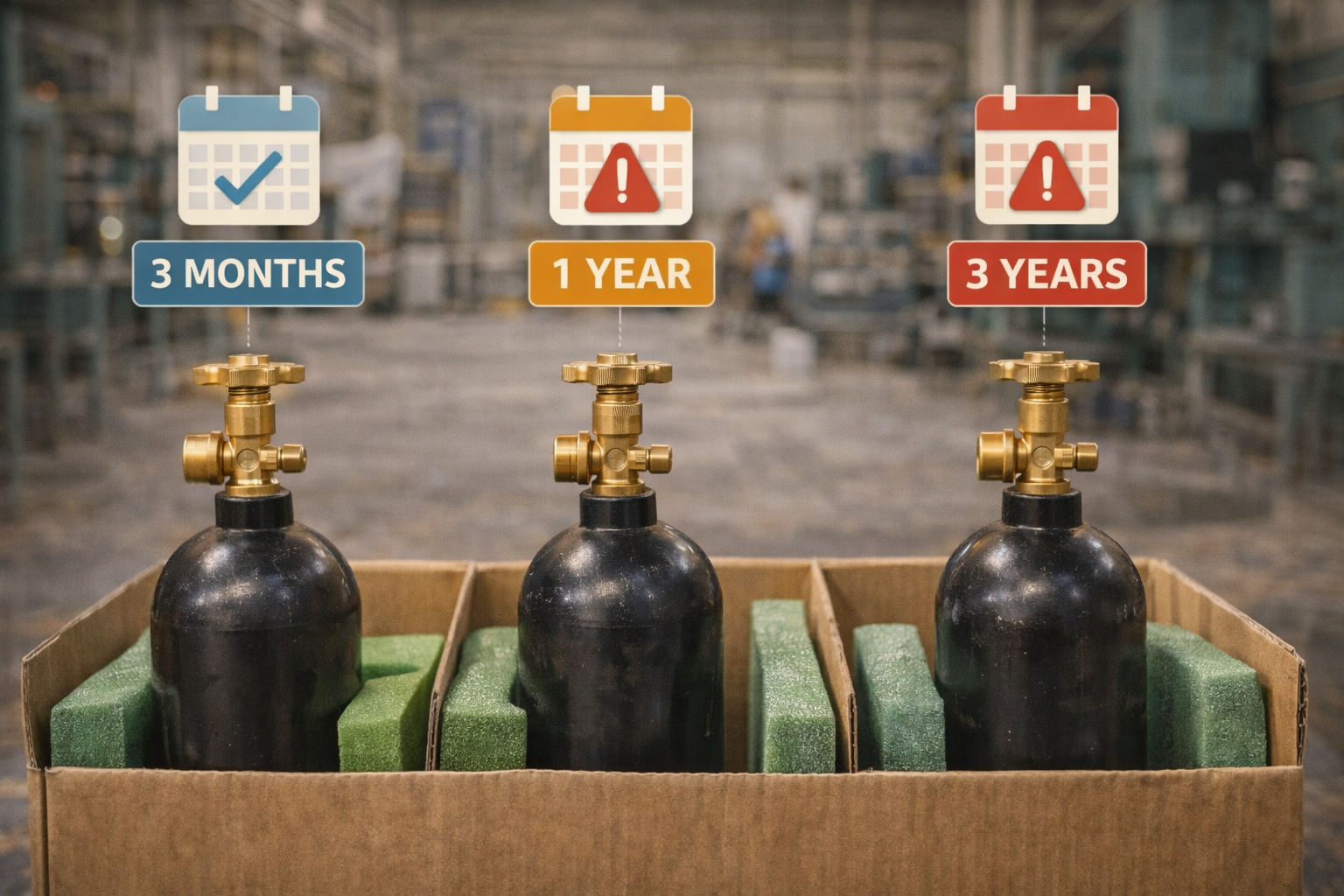
When I think about the very first batch of CO2 cylinders our factory ever produced, I still feel a mixture of pride and embarrassment. Pride, because stepping into a pressure-vessel industry is never easy. Embarrassment, because we made so many mistakes that could have been avoided if someone had told us the truth about manufacturing CO2 cylinders.
Most new importers underestimate how many small decisions affect the final cylinder. They focus on price and surface finishing, but they overlook the deeper elements — alloy purity, heat treatment stability, internal cleaning, thread machining, valve matching, and certification testing. I learned these lessons the hard way, through delayed shipments, testing failures, and endless rework.
This article is the guide I wish someone had given me when I first entered the industry.
Table of Contents
What should you know before producing CO2 cylinders?
The most important thing to understand is this: a CO2 cylinder is only as reliable as the processes you cannot see. The internal structure, the thermal treatment, the microscopic surface changes — these are what determine safety. Not the paint, not the packaging, not the “factory photo” you receive.
Back when we produced our first batch, I thought alloy choice was a simple decision. Only later did I learn how much the purity and trace-element composition affect the cylinder’s burst pressure. Even a well-known food-grade cylinder, such as those used in soda machines, relies on consistent internal tolerances. If you browse something like the soda cylinder overview on our website, you’ll notice the emphasis on pressure stability rather than surface design — a reminder of what truly matters in production.
The Lessons I Learned (and Wish I Knew Earlier)
After years of watching both factories and importers struggle, I’ve identified the key lessons that define whether a CO2 cylinder becomes a smooth production success or a costly disaster.
1. Alloy purity affects everything — from forming to burst pressure.
In the early days, I assumed that any aluminum labeled “6061” would behave the same. It does not.
Even minor variations in magnesium or silicon content change how the material stretches under pressure. At one point, we received a batch of alloy that passed visual inspection but behaved unpredictably during hydro testing. Only after laboratory analysis did we realize the composition was slightly off-spec.
This experience taught me that alloy certificates must be verified carefully, especially when producing high-volume CO2 cylinders.
2. Heat treatment determines the cylinder’s long-term reliability.
Heat treatment is the most misunderstood part of CO2 cylinder production. Most importers don’t ask about it, and many suppliers don’t explain it because it’s complicated.
But here is the truth: if the heat treatment is inconsistent by even 10°C, the entire batch can show unstable pressure performance.
An overheated batch may become brittle.
An underheated batch may deform under pressure.
We learned this the hard way. During one early run, two heat-treatment zones inside our furnace drifted out of alignment. The result was a batch with inconsistent elongation performance during burst tests. Reworking the entire batch took weeks — something no importer wants to experience.
3. Thread cutting is not “a small detail.” It is one of the biggest failure risks.
Thread integrity determines whether the valve seals correctly.
Yet many new manufacturers treat it as a simple machining step.
When we started, we had issues with:
thread depth inconsistency
tool wear that went unnoticed
micro-burrs that caused slow leaks
I now believe valve thread cutting is one of the top indicators of whether a factory truly understands gas cylinder production. It requires careful calibration and constant inspection.
4. Internal cleaning is essential for food-grade CO2 cylinders.
If your cylinders are used for beverages, home carbonation, or soda machines, internal cleanliness is not optional. Any trace of oil or machining fluid can cause contamination.
We underestimated this at the beginning. Our early cleaning system failed to remove microscopic residue from CNC machining. Only after upgrading to a multi-stage cleaning process — including high-pressure water jets and filtered drying — did we achieve consistent food-grade performance.
This is why beverage equipment retailers always emphasize internal purity and cleanliness requirements. A cylinder may look perfect on the outside, but if the inside is not prepared properly, it compromises the entire product.
5. Certification testing takes more time and discipline than most buyers expect.
One of the biggest early frustrations we faced was the time needed for proper testing:
hydrostatic testing
burst pressure testing
gas-tightness checks
valve torque testing
None of these steps can be rushed. And sometimes, despite doing everything right, a batch will still show anomalies that require rechecking. Importers who expect “instant production” often misunderstand how safety systems work.
If you’re unsure how testing fits into overall manufacturing, even reading a basic article about carbon dioxide and its behavior under pressure — such as the general CO2 explanation on Wikipedia — helps build a foundation for understanding why testing is unavoidable.
Final Thoughts
If I could travel back in time and talk to my younger self, I would say this:
“Slow down. Understand the material. Respect the heat treatment. Never rush testing. And always treat the invisible parts of the process as the most important ones.”
Producing CO2 cylinders is not just manufacturing — it is chemistry, engineering, and discipline. Importers who understand these details make better decisions, choose stronger suppliers, and avoid painful mistakes.
I share these lessons not to impress anyone, but to save others from the challenges we faced during our early years.If you would like to learn more→